


 Deutsch
 English
 Español
 Français
 Nederlands
 Português


 Share
Share




The World Economic Forum's Global Risks Report 2026, released in January 2026, has ranked geoeconomic confrontation as the number one short-term risk for the first time, signaling a profound shift in the global strategic landscape. With US effective tariff rates on key Chinese imports soaring to approximately 22% and over 18,000 discriminatory trade measures enacted globally since 2020, the era of frictionless globalization has given way to a new age of supply chain weaponization. At the heart of this transformation lies the battle for critical minerals, where China's stranglehold over processing — roughly 90% of rare earths and 60% of lithium chemicals — is driving resource nationalism from Indonesia to Chile, while the US and EU scramble to build alternative supply chains through initiatives like the FORGE partnership.
What Is Geoeconomic Confrontation and Why Is It the Top Risk?
Geoeconomic confrontation refers to the use of economic tools — tariffs, export controls, investment screening, and financial sanctions — to achieve strategic geopolitical objectives. The WEF report, based on a survey of over 1,300 global experts, places this risk above mis- and disinformation, social polarization, and even climate change in the two-year outlook. According to the report, 68% of experts expect a multipolar or fragmented global order, and half anticipate a turbulent world over the next two years, up from 36% in the previous year. The rise of economic nationalism has fundamentally altered the calculus for multinational corporations, which now face a landscape where cost optimization must be balanced against supply chain security.
Tariffs as a Weapon: The US-China Trade War Escalates
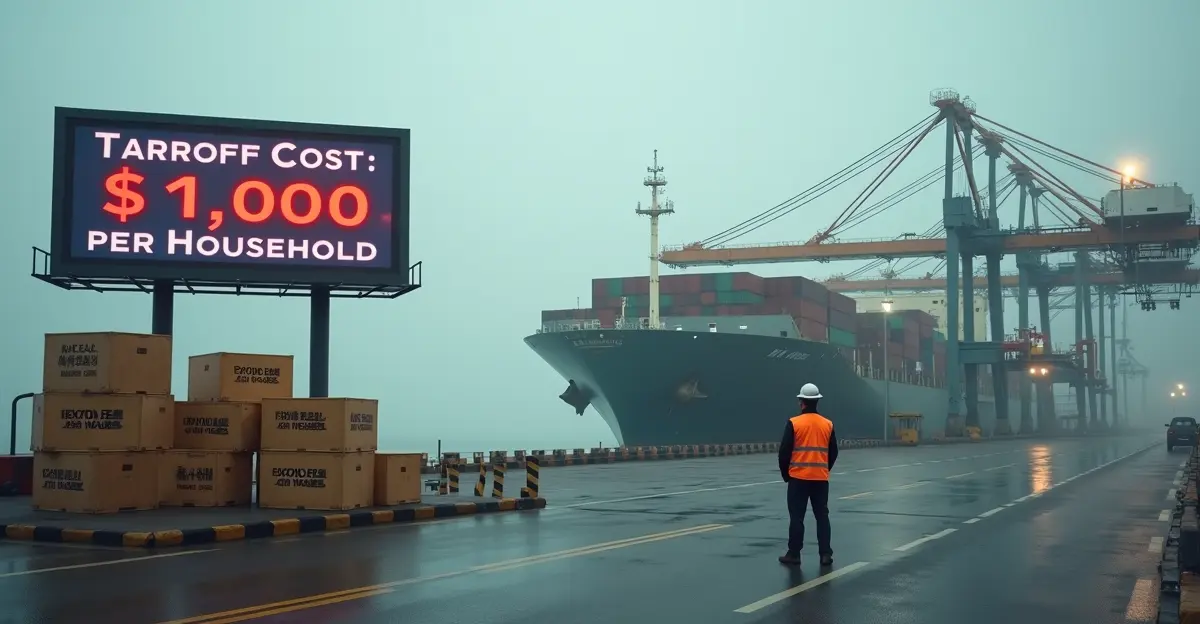
The US has dramatically escalated tariff regimes against China since 2025. Section 301 tariffs now cover 25,308 HTS codes, with rates ranging from 7.5% to 100% — electric vehicles face a staggering 127.5% effective rate when stacked with Section 122 global surcharges and Section 232 sector tariffs. The Section 122 global surcharge, a 10% duty on most imports (expiring July 24, 2026 unless extended), adds another layer of complexity. Combined, these measures have pushed the average effective US tariff rate on Chinese goods to approximately 22%, with some categories exceeding 100%. China has retaliated with its own tariffs and export controls, particularly on critical minerals, creating a tit-for-tat escalation that shows no signs of abating.
The 18,000 Trade Barrier Milestone
Since 2020, governments worldwide have enacted over 18,000 new discriminatory trade measures, according to UNCTAD. These include export bans, local content requirements, subsidies, and technical barriers designed to advantage domestic industries. The proliferation of protectionist policies has fragmented global trade into competing blocs, with South-South trade surging to $6.8 trillion as developing nations seek alternatives to traditional Western markets. UNCTAD projects global trade growth will slow to just 2.6% in 2026, down from historical averages of 4-5%.
Critical Minerals: The New Geopolitical Battleground
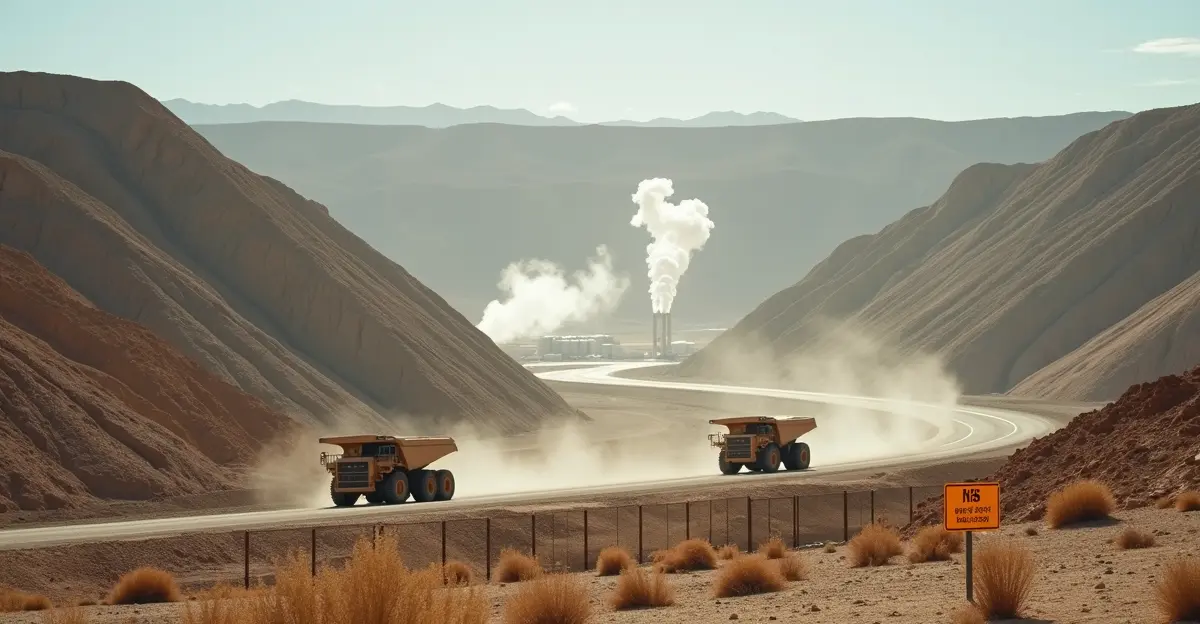
China's dominance over critical mineral processing is the single most consequential vulnerability for Western economies. Beijing controls roughly 90% of global rare earth refining, 60% of lithium chemical processing, over 70% of cobalt refining, and more than 90% of battery cathode and anode active materials production. In early 2026, China tightened rare earth technology export controls, triggering sixfold price spikes outside China and reducing European licensing approval rates below 25%.
Resource Nationalism Spreads from Indonesia to Chile
Resource-rich nations are capitalizing on Western dependency. Indonesia, which banned raw nickel ore exports in 2020, has attracted $30 billion in downstream investment from Chinese firms, boosting processed nickel exports from $3.3 billion to $33.9 billion. Chile's 2023 National Lithium Strategy requires majority state control in future projects. The Democratic Republic of Congo imposed a cobalt quota system that slashed exports to roughly half of pre-2025 levels, causing a 245% price surge. These moves represent a coordinated shift from raw material export to value-added processing, often with Chinese partnership.
Western Countermeasures: FORGE and Project Vault
In response, the US launched FORGE (Forum on Resource Geostrategic Engagement) at the February 2026 Critical Minerals Ministerial, a plurilateral coalition of 54 nations creating a preferential trade-and-investment zone with coordinated price floors. The administration has mobilized over $30 billion in support, including EXIM Bank's $10 billion Project Vault to establish a US Strategic Critical Minerals Reserve. Eleven new bilateral critical minerals frameworks were signed with countries including Argentina, Morocco, the Philippines, UAE, and the UK. The EU Critical Raw Materials Act sets 2030 benchmarks of 10% extraction, 40% processing, and 25% recycling of strategic minerals. However, analysts warn that rebuilding independent supply chains could take 20-30 years, with a narrowing 12-18 month window to act before Chinese processing dependency becomes entrenched.
Impact on Multinational Corporations: From Just-in-Time to Just-in-Case
The weaponization of supply chains is forcing multinational corporations to abandon cost-optimized global networks in favor of friendshoring and multi-hub resilience strategies. According to Capgemini's 2026 Reindustrialization Report, 73% of large organizations now have a reindustrialization strategy in place or in development, up from 59% in 2024. Planned investment over the next three years stands at nearly $2.5 trillion, down from an earlier projection of $4.7 trillion, signaling a shift toward capital-efficient models rather than reduced ambition. 86% of organizations now prioritize market access and supply chain resilience over short-term savings.
Friendshoring and Reshoring Accelerate
Regional strategies are diverging sharply. Friendshoring — sourcing from allied nations — is prominent in continental Europe (64% of firms), while reshoring is accelerating in the US (48%). Mexico has surpassed China as the top US trading partner, and companies are shifting from a 'China +1' to a 'China +N' sourcing strategy, diversifying across Vietnam, India, and Mexico. KPMG reports that 82% of executives saw foreign sales decline, while 26% of companies actively plan reshoring, up from 10% six months earlier. The reindustrialization of Western economies is creating new industrial clusters but also facing talent shortages in advanced manufacturing, automation, and AI skills.
Expert Perspectives
"Geoeconomic confrontation is no longer a theoretical risk — it is the defining reality of 2026," said Martin Baxter, deputy CEO of ISEP, commenting on the WEF report. "Climate change is opening new Arctic routes and increasing resource competition, but the immediate threat is the weaponization of supply chains by state actors." The Atlantic Council notes that FORGE's success will require transforming bilateral frameworks into genuine plurilateral coordination and designing effective reference prices without creating perverse incentives.
Frequently Asked Questions
What is geoeconomic confrontation?
Geoeconomic confrontation is the use of economic tools — tariffs, export controls, sanctions, and investment restrictions — to achieve strategic geopolitical objectives. It is ranked as the top short-term global risk in the WEF Global Risks Report 2026.
How high are US tariffs on Chinese goods in 2026?
Effective US tariff rates on Chinese imports average approximately 22%, with some categories like electric vehicles facing rates exceeding 100% when Section 301, Section 122, and Section 232 duties are stacked.
What is China's share of critical mineral processing?
China controls roughly 90% of global rare earth refining, 60% of lithium chemical processing, over 70% of cobalt refining, and more than 90% of battery cathode and anode active materials production.
What is the FORGE partnership?
FORGE (Forum on Resource Geostrategic Engagement) is a US-led plurilateral coalition of 54 nations launched in February 2026 to create a preferential trade-and-investment zone for critical minerals, with coordinated price floors to counter Chinese market manipulation.
How are companies responding to supply chain risks?
Multinational corporations are shifting from just-in-time to just-in-case strategies, embracing friendshoring, reshoring, and multi-hub sourcing. 73% of large organizations now have reindustrialization strategies, with $2.5 trillion in planned investments through 2028.
Conclusion: A Narrowing Window for Action
The convergence of tariff escalation, critical mineral dependency, and resource nationalism has created a perfect storm for global supply chains. The WEF's elevation of geoeconomic confrontation to the top risk underscores the urgency for coordinated Western action. With a 12-18 month window to build alternative supply chains before Chinese processing dominance becomes irreversible, the decisions made in 2026 will shape the geopolitical landscape for decades. The era of cost-optimized globalization is over; the era of strategic resilience has begun.
Sources
- World Economic Forum, Global Risks Report 2026, January 2026
- UNCTAD, Global Trade Update, 2026
- Capgemini Research Institute, The Resurgence of Manufacturing, April 2026
- US Department of State, 2026 Critical Minerals Ministerial, February 2026
- Atlantic Council, US Critical Minerals Policy Goes Collaborative with FORGE, 2026
- Climate Energy Finance, Raw Power: China Locks-in Global Dominance of Critical Minerals, March 2026


Follow Discussion